Diabetes Health Center
Glossary of Diabetes Terms
Acesulfame-k: An artificial sweetener used in place of sugar. It is
not metabolized by the body and therefore does not contribute to calories and
has contains no carbohydrates. Therefore, it has no effect on blood sugar
levels.
Acetone: A chemical formed in the blood when the body breaks down fat
instead of sugar for energy. If acetone forms, it usually means the cells are
starved. Commonly, the body's production of acetone is known as
"ketosis." It occurs when there is an absolute or relative deficiency
in insulin so sugars cannot get into cells for energy. The body then tries to
use other energy sources like proteins from muscle and fat from fat cells.
Acetone passes through the body into the urine.
Acidosis: Too much acid in the body, usually from the production of
ketones like acetone, when cells are starved. For a person with diabetes, the
most common type of acidosis is called "ketoacidosis."
Acute: Abrupt onset that is usually severe; happens for a limited period
of time.
Adrenal glands: Two endocrine glands that sit on top of the kidneys and
make and release stress hormones, such as: epinephrine (adrenaline), which
stimulates carbohydrate metabolism; norepinephrine, which raises heart rate and
blood pressure; corticosteroid hormones, which control how the body utilizes
fat, protein, carbohydrates, and minerals and help reduce inflammation. They
also produce sex hormones like testosterone and can produce DHEA and
progesterone.
Adult-onset diabetes: A term no longer used. Considered the same
as type 2 diabetes, yet the increased epidemic in obesity has lead to an
increase in type 2 diabetes in children. Therefore the term is no longer
considered valid. "Non insulin dependant diabetes" is also considered
an incorrect phrase in describing type 2 diabetes, as patients with this type
of diabetes may at some point require insulin.
Adverse effect: Harmful effect.
Albuminuria: More than normal amounts of a protein called
"albumin" in the urine. Albuminuria may be a sign of kidney disease, a
problem that can occur in about 30-45% of people who have had type 1 diabetes
for at least 10 years. In patients with type 2 diabetes, the kidneys may
already show signs of small amounts of protein spillage when they are
diagnosed- called "microalbumin." This may be from the result of
diabetes or from other diseases seen in conjunction with diabetes like high
blood pressure. Protein in the urine increases the risk that a person with
diabetes can have end stage kidney disease. It also means that the person is at
a particularly high risk for the development of cardiovascular disease.
Alpha cell: A type of cell in an area of the pancreas called the islets
of Langerhans. Alpha cells make and release a hormone called
"glucagon." Glucagon functions in direct opposition to insulin. In
other words, it increases the amount of glucose in the blood by releasing
stored sugar from the liver.
Anomaly: Birth defects; deviation from the norm or average.
Antibodies: Proteins that the body produces to protect itself from
foreign substances, such as bacteria or viruses.
Antidiabetic agent: A substance that helps a person with diabetes
control the level of sugar in their blood so their body functions properly.
(See also insulin, oral diabetes medication).
Antigens: Substances that cause an immune response in the body;
identifying substances or markers on cells. The body produces antibodies to
fight antigens, or harmful substances, and tries to eliminate them.
Artery: A blood vessel that carries blood from the heart to other parts
of the body. Arteries are thicker than veins and have stronger, more elastic
walls. Arteries sometimes develop plaque within their walls in a process known
as "atherosclerosis." These plaques can become fragile and rupture
leading to the complications associated with diabetes such as heart attacks and
strokes.
Artificial pancreas: A glucose sensor attached to an insulin delivery.
Both are connected together by what is known as a "closed loop system."
In other words, it is a system that not only can determine the body glucose
level, but takes that information and releases the appropriate amounts of
insulin for the particular sugar it just measured. The artificial pancreas can
regulate the amount of insulin released, so low sugars would cause the device
to decrease insulin delivery. Studies are being conducted to develop a version
of this system that can be implanted.
Aspartame: An artificial sweetener used in place of sugar because it has
few calories. Also known as "Equal" and "NutraSweet."
Asymptomatic: No symptoms; no clear sign that disease is present.
Atherosclerosis: A disease of the arteries. It is caused by deposits of
cholesterol in the walls of arteries. These plaques can build up and cause
narrowing of the arteries or they can become fragile and break off, forming
blood clots that cause heart attacks and stroke. The arteries that supply blood
to the heart can become severely narrowed, decreasing the supply of oxygen-rich
blood to the heart, especially during times of increased activity.
Autoimmune disease: A disorder of the body's immune system in which the
immune system mistakenly attacks itself. Examples of these diseases include
type 1 diabetes, hyperthyroidism caused by Graves' disease, hypothyroidism
caused by Hashimoto's disease.
Autonomic neuropathy: Nerve damage to organs of the body that we cannot
consciously control. These nerves control our digestive system, blood vessels,
urinary system, skin, and sex organs. Autonomic nerves are not under a person's
control and function on their own.
Background retinopathy: This is the mildest form of eye disease damage
from diabetes. It can be associated with normal vision and often progresses to
other forms of eye disease.
Basal rate: The amount of insulin required to manage normal daily blood
glucose fluctuations. Most people constantly produce insulin to manage the
glucose fluctuations that occur during the day. In a person with diabetes,
giving a constant low level amount of insulin via insulin pump mimics this
normal phenomenon.
Beta cell: A type of cell in an area of the pancreas called the islets
of Langerhans. Beta cells make and release insulin, which helps control the
glucose level in the blood.
Biosynthetic insulin: Genetically engineered human insulin. This insulin
has a much lower risk of inducing an allergic reaction in people who use it,
unlike cow (bovine) or pork (porcine) insulins. The manufacturers of synthetic
insulin make it in a short acting form which works to cover meal time increases
in sugars, they also produce longer acting insulins which cover sugars between
meals and when fasting, such as during the night.
Blood glucose: See glucose
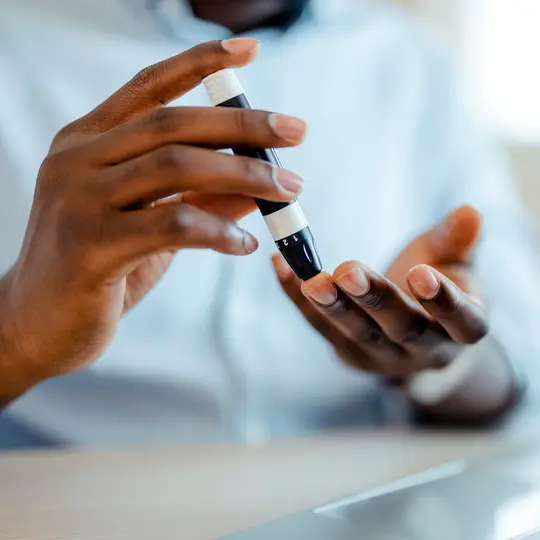
Blood glucose monitoring or testing: A method of testing how much sugar
is in your blood. Home blood glucose monitoring involves pricking your finger
with a lancing device, putting a drop of blood on a test strip and inserting
the test strip into a blood glucose-testing meter that displays your blood
glucose level. Blood sugar testing can also be done in the laboratory. Most
large recognized organizations recommend blood glucose monitoring numerous
times during the day. Most recommend a glucose check first thing in the morning
before eating and a sugar check two hours after meals.
Blood pressure: The measurement of the pressure or force of blood
against the blood vessels (arteries). Blood pressure is written as two numbers.
The first number or top number is called the systolic pressure and is the
pressure in the arteries when the heart beats and pushes more blood into the
arteries. The second number, called the diastolic pressure, is the pressure in
the arteries when the heart rests between beats. The ideal blood pressure for
non-pregnant people with diabetes is 130/80 or less.
Brittle diabetes: When a person's blood sugar level often shifts very
quickly from high to low and from low to high.
Blood urea nitrogen (BUN): A product of metabolism that is excreted in
the urine. It is measured in the blood as an indirect measure of how well the
kidney is functioning. Increased BUN levels in the blood may indicate early
kidney damage, meaning the kidneys aren't effectively excreting BUN.
Bunion: Bump or bulge on the first joint of the big toe caused by the
swelling of a sac of fluid under the skin and abnormalities in the joint. Women
are usually affected because of tight fitting or pointed shoes or high heels
that put pressure on the toes, forcing the outward movement of the joint.
People with flat feet or low arches are also prone to bunions. Shoes that fit
well and are padded can prevent bunions from forming. Bunions may lead to other
problems, such as serious infection from the big toe putting pressure on other
toes.
Callus: A small area of skin, usually on the foot, that has become thick
and hard from rubbing or pressure. Calluses may lead to other problems, such as
serious infection. Shoes that fit well can prevent calluses from forming.
Calorie: Energy that comes from food. Some foods have more calories than
others. Fats have more calories than proteins and carbohydrate. Most vegetables
have few.
Carbohydrate: One of the three main classes of foods and a source of
energy. Carbohydrates are mainly sugars and starches that the body breaks down
into glucose (a simple sugar that the body can use to feed its cells).
Cardiologist: A doctor who takes care of people with heart disease; a
heart specialist.
Cardiovascular: Relating to the heart and blood vessels (arteries,
veins, and capillaries).
Certified Diabetes Educator (CDE): A health care professional that is
certified by the American Association of Diabetes Educators (AADE) to teach
people with diabetes how to manage their condition.
Cholesterol: A waxy, odorless substance made by the liver that is an
essential part of cell walls and nerves. Cholesterol plays an important role in
body functions such as digestion and hormone production. In addition to being
produced by the body, cholesterol comes from animal foods that we eat. Too much
cholesterol in the blood causes an increase in particles called LDL (known as
bad cholesterol) which increases the build-up of plaque in the artery walls and
lead to atherosclerosis.
Claudication: See Intermittent claudication.
Coma: A emergency in which a person is not conscious; may occur in
people with diabetes because his or her blood sugar is too high or too
low.
Dawn phenomenon: A rise in blood sugar levels in the early morning
hours.
Dehydration: Large loss of body water. If a person with diabetes has a
very high blood sugar level, it causes increased water loss through increased
urination and the person becomes very thirsty.
Diabetes: See Type 1 diabetes and Type 2 diabetes.
Diabetic ketoacidosis (DKA): A severe, life-threatening condition that
results from hyperglycemia (high blood sugar), dehydration, and acid build up
that needs emergency treatment. DKA happens when there is not enough insulin
and cells become starved for sugars. An alternative source of energy called
ketones becomes activated. The system creates a build up of acids. Ketoacidosis
can lead to coma and even death.
Dietitian: An expert in nutrition who helps people plan the type and
amount of foods to eat for special health needs. A registered dietitian (RD)
has special qualifications.
Emergency medical identification: Cards, bracelets, or necklaces with a
written message, used by people with diabetes or other medical problems to
alert others in case of a medical emergency, such as coma.
Endocrinologist: A doctor who treats people with hormone problems.
Exchange lists: A way of grouping foods together to help people on
special diets stay on the diet. Each group lists food in a serving size. A
person can exchange, trade, or substitute a food serving in one group for
another food serving in the same group. The lists put foods into six groups:
starch/bread, meat, vegetables, fruit, milk, and fats. Within a food group, one
serving of each food item in that group has about the same amount of
carbohydrate, protein, fat, and calories.
Fasting plasma glucose test (FPG): The preferred method of screening for
diabetes. The FPG measures a person's blood sugar level after fasting or not
eating anything for at least 8 hours. Normal fasting blood glucose is less than
100 milligrams per deciliter or mg/dL. A fasting plasma glucose greater than
100 mg/dL and less than126 mg/dL implies that the person has an impaired
fasting glucose level, but may not have diabetes. A diagnosis of diabetes is
made when the fasting blood glucose is greater than 126 mg/dL and when blood
tests confirm abnormal results. These tests can be repeated on a subsequent day
or by measuring glucose 2 hours after a meal. The results should show an
elevated blood glucose of more than 200 mg/dL.
Fats: Substances that help the body use some vitamins and keep the skin
healthy. They are also the main way the body stores energy. In food, there are
many types of fats; saturated, unsaturated, polyunsaturated, monounsaturated,
and trans fats. To maintain your blood cholesterol and triglyceride (lipid)
levels as near the normal ranges as possible, the American Diabetes Association
recommends limiting the amount of saturated fats and cholesterol in our diets.
Saturated fats contribute to blood levels of bad LDL cholesterol. The amount of
saturated fats should be limited to less than 10% of total caloric intake and
the amount of dietary cholesterol should be limited to 300 mg/day.
Fructose: A type of sugar found in many fruits and vegetables and in
honey. Fructose is used to sweeten some diet foods, but this type of sweetener
is typically not recommended to diabetics because it could have a negative
effect on blood sugar.
Gangrene: The death of body tissues, usually due to a lack of blood
supply, especially in the legs and feet.
Gastroparesis: A form of nerve damage that affects the stomach and
intestines. With this condition, food is not digested properly and does not
move through the stomach and intestinal tract normally. It can result in bouts
of diarrhea or chronic constipation because the transit time of food can be
altered by nerve damage. This type of nerve damage can also cause a significant
problem with smooth control of blood sugars.
Gestational diabetes: A high blood sugar level that starts or is first
recognized during pregnancy. As pregnancy progresses, there is an increased
need for nutrients for the developing baby. Additionally, hormone changes
during pregnancy affect the action of insulin, resulting in high blood sugar
levels. Usually, blood sugar levels return to normal after childbirth. However,
women who have had gestational diabetes are at increased risk of developing
type 2 diabetes later in life. Gestational diabetes can increase complications
during labor and delivery and increase the rates of fetal complications related
to the increased size of the baby.
Glaucoma: An eye disease associated with increased pressure within the
eye. Glaucoma can damage the optic nerve and cause impaired vision and
blindness.
Glucagon: A hormone that raises the level of glucose in the blood by
releasing stored glucose from the liver. Glucagon is sometimes injected when a
person has lost consciousness (passed out) from a low blood sugar reaction. The
injected glucagon helps raise the level of glucose in the blood.
Glucose: A simple sugar found in the blood. It is the body's main source
of energy; also known as "dextrose."
Glucose tolerance test: A test to determine if a person has diabetes.
The test is done in a lab or doctor's office in the morning before the person
has eaten. A period of at least 8 hours without any food is recommended prior
to doing the test. First, a sample of blood is taken. Then the person drinks a
liquid that has sugar in it. Two hours later, a second blood test is done. If
the results of the fasting or first blood test are abnormal yet still not high
enough to be considered in the diabetes range, then the person is said to have
glucose intolerance. A fasting blood sugar greater than 126 mg/dl is considered
diabetes. If the 2 hour blood test is abnormal but still not high enough to be
considered in the diabetic range, this too, is considered an abnormal glucose
tolerance. If the two hour test result shows a blood sugar greater than 200
mg/dl, the person is consider to have diabetes.
Glycated hemoglobin test (HbA1c): This is an important blood test to
determine how well you are managing your diabetes. Hemoglobin is a substance in
red blood cells that carries oxygen to tissues. It can also attach to sugar in
the blood forming a substance called glycated hemoglobin or a Hemoglobin A1C.
The test provides an average blood sugar measurement over a six to twelve week
period and is used in conjunction with home glucose monitoring to make
treatment adjustments. The ideal range for people with diabetes is generally
less than 7%.
High blood pressure: A condition when the blood flows through the blood
vessels at a force greater than normal. High blood pressure strains the heart,
harms the arteries and increases the risk of heart attack, stroke, and kidney
problems. Also called "hypertension." The goal for blood pressure in
people with diabetes is less than 130/80.
High blood sugar: See Hyperglycemia
Home blood glucose monitoring: A way in which a person can test how much
sugar is in the blood. Also called "self-monitoring of blood glucose."
Home glucose monitoring tests whole blood (plasma and blood cell components),
thus the results can be different from lab values which test plasma values of
glucose. Typically the lab plasma values can be higher than the glucose checks
done at home with a glucose monitor.
Hormone: A chemical released in one organ or part of the body that
travels through the blood to another area where it helps to control certain
bodily functions. For instance, insulin is a hormone made by the beta cells in
the pancreas and when released, it triggers other cells to use glucose for
energy.
Human insulin: Bio-engineered insulin very similar to insulin made by
the body. The DNA code for making human insulin is put into bacteria or yeast
cells and the insulin made is purified and sold as human insulin.
Hyperglycemia: High blood sugar. This condition is fairly common in
people with diabetes. Many things can cause hyperglycemia. It occurs when the
body does not have enough insulin or cannot use the insulin it does have.
Hypertension: See High blood pressure
Hypoglycemia: Low blood sugar. The condition often occurs in people with
diabetes. Most cases occur when there is too much insulin and not enough
glucose in your body.
Impotence: Also called "erectile dysfunction." Persistent
inability of the penis to become erect or stay erect. Some men may become
impotent after having diabetes for a long time because nerves and blood vessels
in the penis become damaged. It is estimated that 50% of men diagnosed with
type 2 diabetes experience impotence.
Injection site rotation: Changing the areas on the body where a person
injects insulin. By changing the area of injection, the injections will be
easier, safer, and more comfortable. If the same injection site is used over
and over again, hardened areas, lumps, or indentations can develop under the
skin, which keep the insulin from being used properly. These lumps or
indentations are called "lipodystrophies."
Injection sites: Places on the body where people can inject insulin most
easily.
Insulin: A hormone produced by the pancreas that helps the body use
sugar for energy. The beta cells of the pancreas make insulin.
Insulin dependent diabetes: Former term used for type 1 diabetes.
Insulin mixture: A mixture of insulin that contains short as well as
intermediate- or long-acting insulin. You can buy premixed insulin to eliminate
the need for mixing insulin from two bottles.
Insulin pump: A small, computerized device -- about the size of a beeper
-- that is worn on a belt or put in a pocket. Insulin pumps have a small
flexible tube with a fine needle on the end. The needle is inserted under the
skin of the abdomen and taped in place. A carefully measured, steady flow of
insulin is released into the tissue.
Insulin reaction: Another term for hypoglycemia in a person with
diabetes. This occurs when a person with diabetes has injected too much
insulin, eaten too little food, or has exercised without eating extra
food.
Insulin receptors: Areas on the outer part of a cell that allow insulin
in the blood to join or bind with the cell. When the cell and insulin bind
together, the cell can take glucose from the blood and use it for energy.
Insulin resistance: When a person's body will not allow insulin to work
properly in the body, even if the person takes very high daily doses of
insulin. This condition can occur when a person is overweight and it often
improves when the person loses weight.
Insulin shock: A severe condition that occurs when the level of blood
sugar drops quickly.
Intermittent claudication: Pain in the muscles of the legs that occurs
off and on, usually while walking or exercising. The pain results from
atherosclerosis of the blood vessels feeding the muscles of the lower
extremities. Claudication usually increases with age and is most common in
people in their sixth or seventh decade of life. Risk factors for developing
narrowing of the arteries that can cause claudication include smoking
cigarettes, high blood pressure, and diabetes. Drugs are available to
treat this condition.
Jet injector: A device that uses high pressure to push insulin through
the skin and into the tissue.
Juvenile-onset diabetes: Former term used for type 1 diabetes.
Ketoacidosis: See Diabetic ketoacidosis (DKA)
Ketone bodies: Often simply called ketones, one of the products of fat
burning in the body. When there is not enough insulin to use blood sugars, your
body breaks down its own fat and protein for energy instead of glucose. When
fat is used, ketone bodies, an acid, appear in your urine and blood. A large
amount of ketones in your system can lead to a serious condition where acids
build up in the body called ketoacidosis. Ketones can be detected and monitored
in your urine at home using products such as Ketostix, Chemstrips, and Acetest.
When your blood sugar is consistently greater than 250 mg/dl, if you are ill or
if you are pregnant and have diabetes, ketones should be checked
regularly.
Kidney disease (nephropathy): In a person with diabetes, nephropathy is
any one of several conditions caused by changes in the very small blood vessels
in the kidneys. These changes cause scarring of the kidneys which can
eventually lead to kidney failure. People who have had diabetes for a long time
may develop nephropathy. An early sign of nephropathy is when proteins can be
detected in the urine.
Kidney threshold: See Renal threshold.
Lancet: A fine, sharp pointed needle for pricking the skin. Used in
blood sugar monitoring.
Laser treatment: The use of a strong beam of light (laser) to heal a
damaged area. A person with diabetes might receive laser treatments to heal
blood vessels in the eye.
Late-onset diabetes: Former term used for type 2 diabetes.
Lipid: Another term for a fat or fat-like substance in the blood. The
body stores fat as energy for future use just like a car that has a reserve
fuel tank. When the body needs energy, it can break down lipids into fatty
acids and burn them like glucose. Excess amounts of fats in the diet can cause
fat build up in the walls of the arteries- called "atherosclerosis."
Excess amounts of calories from fats or other nutrients can lead to an increase
in weight gain.
Low blood sugar, low blood glucose: See Hypoglycemia
Metabolism: All of the physical and chemical processes in the body that
occur when food is broken down, energy is created and wastes are
produced.
Mg/dL (milligrams per deciliter): Measurement that indicates the amount
of a particular substance such as glucose in a specific amount of blood.
Mixed dose: A prescribed dose of insulin in which two types of insulin
are combined and injected at once. A mixed dose commonly combines regular
insulin, which is fast-acting, with a longer-acting insulin. A mixed dose may
be prescribed to provide better blood sugar control.
Nephropathy: Disease of the kidneys caused by damage to the small blood
vessels or to the units in the kidneys that clean the blood. People who have
had diabetes for a long time may develop nephropathy.
Neurologist: A doctor who treats people who have problems of the nervous
system (brain, spinal cord, and nerves).
Neuropathy: Nerve damage. People who have had diabetes that is not well
controlled may develop nerve damage.
Non-insulin dependent diabetes: Former term for type 2 diabetes.
Nutritionist: See Dietitian
Obesity: A term uses to describe excess body fat. It is defined in terms
of a person's weight and height, or the body mass index (BMI). A BMI over 30 is
classified as being obese. Obesity makes your body less sensitive to insulin's
action. Extra body fat is thought to be a risk factor for diabetes.
Ophthalmologist: A doctor who treats people with eye diseases.
Optometrist: A person professionally trained to test the eyes and to
detect and treat eye problems, as well as some diseases, by prescribing and
adapting corrective lenses.
Oral diabetes medications: Medications that people take to lower the
level of sugar in the blood. Oral diabetes medications are prescribed for
people whose pancreas still produces some insulin. These medications are not
used in diabetes during pregnancy.
Pancreas: An organ behind the lower part of the stomach that is about
the size of a hand. It makes insulin so the body can use sugar for
energy.
Peak action: The time when the effect of something is as strong as it
can be, such as when insulin is having the most effect on blood sugar.
Periodontal disease: Damage to the gums and tissues around the teeth.
People who have diabetes are more likely to have periodontal disease than
people who do not have diabetes.
Peripheral neuropathy: A type of nerve damage most commonly affecting
the feet and legs.
Peripheral vascular disease (PVD): An abnormal condition that affects
the blood vessels outside the heart. Often occurs as a result of decreased
blood flow and narrowing of the arteries from atherosclerosis, to the hands and
feet. People who have had diabetes for a long time may develop PVD.
Podiatrist: A health professional who diagnoses and treats foot
problems.
Polydipsia: Excessive thirst that lasts for long periods of time; may be
a sign of diabetes.
Polyphagia: Excessive hunger and eating; may be a sign of diabetes.
People with polyphagia often lose weight even though they are eating more than
normal.
Polyunsaturated fat: A type of fat that can be substituted for saturated
fats in the diet and can reduce 'bad' LDL cholesterol. It can have a small
effect in lowering 'good' HDL cholesterol as well, but not to the degree that
saturated fats do. .
Polyuria: Increased need to urinate often; a common sign of
diabetes.
Protein: One of three main classes of food. Proteins are made of amino
acids, which are called the "building blocks of the cells." Cells need
protein to grow and to mend themselves. Protein is found in many foods, like
meat, fish, poultry, eggs, legumes, and dairy products.
Rebound effect: See Somogyi effect
Regular insulin: A type of insulin that is rapid-acting.
Renal: Relating to the kidneys.
Retina: The center part of the back lining of the eye that senses light.
It has many small blood vessels that are sometimes harmed when a person has had
diabetes for a long time.
Retinopathy: A disease of the small blood vessels in the retina of the
eye.
Risk factor: Anything that increases the chance of a person developing a
disease or condition.
Saccharin: An artificial sweetener that is used in place of sugar
because it has no calories and does not increase blood sugar.
Self-blood glucose monitoring: See Home blood glucose monitoring
Somogyi effect: Also called "rebound effect," it occurs when
there is a upward swing in blood sugar from an extremely low level of glucose
in the blood to a very high level. It usually happens during the night and
early A.M. morning hours. People who experience high levels of blood sugar in
the morning may need to test their blood sugar levels in the middle of the
night. If blood sugar levels are repeatedly low, addition of an evening snack
or a lowering of the insulin doses may be recommended.
Sorbitol: A sugar -- produced from fruits -- that the body uses slowly.
It is a sweetener used in diet foods and is called a "nutritive
sweetener" because it has four calories in every gram, just like table
sugar and starch. These compounds are used in many foods labeled as 'sugar
free' and 'no sugar added' and can raise your blood glucose. Because a food is
labeled 'sugar free,' it doesn't necessarily mean carbohydrate free.
Sucrose: Table sugar; a form of sugar that the body must break down into
a more simple form before the blood can absorb it and take it to the
cells.
Sugar: A class of carbohydrates that tastes sweet. Sugar is a quick and
easy fuel for the body to use. Some types of sugar are lactose, glucose,
fructose, and sucrose.
Sulfonylureas: Pills or capsules that people take to lower the level of
sugar in the blood. These oral diabetic medications work to lower your blood
sugar by making your pancreas produce more insulin.
Triglyceride: Fats carried in the blood from the food we eat. Most of
the fats we eat, including butter, margarines and oils, are in triglyceride
form. Excess triglycerides are stored in fat cells throughout the body. The
body needs insulin to remove this type of fat from the blood.
Type 1 diabetes: A type of diabetes in which the insulin-producing cells
(called beta cells) of the pancreas are damaged. People with type 1 diabetes
produce little or no insulin, so glucose cannot get into the body's cells for
use as energy. This causes blood sugar to rise. People with type 1 diabetes
must use insulin injections to control their blood sugar.
Type 2 diabetes: A type of diabetes in which the insulin produced is
either not enough or the person's body does not respond normally to the amount
present. When there is not enough insulin or the insulin is not used as it
should be, glucose cannot get into the body's cells for use as energy. This
causes blood sugar to rise.
U-100: See Unit of insulin
Ulcer: A break in the skin; a deep sore. People with diabetes may
develop ulcers from minor scrapes on the feet or legs, from cuts that heal
slowly, or from the rubbing of shoes that don't fit well. Ulcers can become
infected and should be treated promptly.
Ultralente insulin: A type of insulin that is long acting, usually the
action of this type of insulin works for 25-36 hours after injection. This type
of insulin has an onset of action four to five hours after injecting and works
most powerfully at eight to 14 hours after injection.
Unit of insulin: The basic measure of insulin. U-100 is the most common
concentration of insulin. U-100 means that there are 100 units of insulin per
milliliter (ml) of liquid. For the occasional patient that has severe insulin
resistance insulin is available as a U-500 form.
Unstable diabetes: See Brittle diabetes
Urine testing: Checking urine to see if it contains ketones. If you have
type 1 diabetes, are pregnant and have diabetes, or have gestational diabetes,
your doctor may ask you to check your urine for ketones. This is an easy test
done at home with a dipstick measure.
Urologist: A doctor who specializes in treatment of the urinary tract
for men and women, as well as treatment of the genital organs for males.
Vaginitis: An inflammation or infection of the vaginal tissues. A woman
with this condition may have itching or burning or vaginal discharge. Women who
have diabetes may develop vaginitis more often than women who do not have
diabetes.
Vascular: Relating to the body's blood vessels (arteries, veins, and
capillaries).
Vein: A blood vessel that carries blood to the heart.
Vitrectomy: A procedure in which the gel from the center of the eyeball
is removed because it has blood and scar tissue in it that blocks vision. An
eye surgeon replaces the clouded gel with a clear fluid.
Xylitol: A nutritive sweetener used in dietary foods. It is a sugar
alcohol that the body uses slowly and contains fewer calories than table
sugar.
WebMD Medical Reference provided in collaboration with the Cleveland Clinic![]()
WebMD Editors' Picks
Most Popular Stories
- 6 Sex Mistakes Women Make
- 7 Pains You Shouldn't Ignore
- The Truth About Tattoos
- 8 Ways to Boost Your Fertility
- Pictures of Bugs and Their Bite Marks
- 6 Sex Mistakes Men Make
- 10 Surprising Health Benefits of Sex
- Swine Flu: What Are Symptoms of Swine Flu?
- 15 Foods to Help You Lose
- Cosmetic Surgery: Before & After Pics