What Is Gestational Diabetes?
Gestational diabetes is a condition in which your blood sugar levels become high during pregnancy. It affects pregnant people who have never been diagnosed with diabetes.
There are two classes of gestational diabetes. Those with class A1 can manage it through diet and exercise. Those who have class A2 need to take insulin or other medications.
Gestational diabetes goes away after you give birth. But it can affect your baby’s health, and it raises your odds of getting type 2 diabetes later in life. You can take steps so you and your baby stay healthy.
How common is gestational diabetes?
Gestational diabetes affects up to 10% of pregnancies in the U.S. each year.
Gestational Diabetes Symptoms
If you have gestational diabetes, you usually don’t have symptoms or might blame them on pregnancy. Most find out that they have it during a routine screening.
You may notice that:
- You’re thirstier than usual.
- You’re hungrier and eat more than usual.
- You pee more than usual.
Normal Blood Sugar Levels During Pregnancy
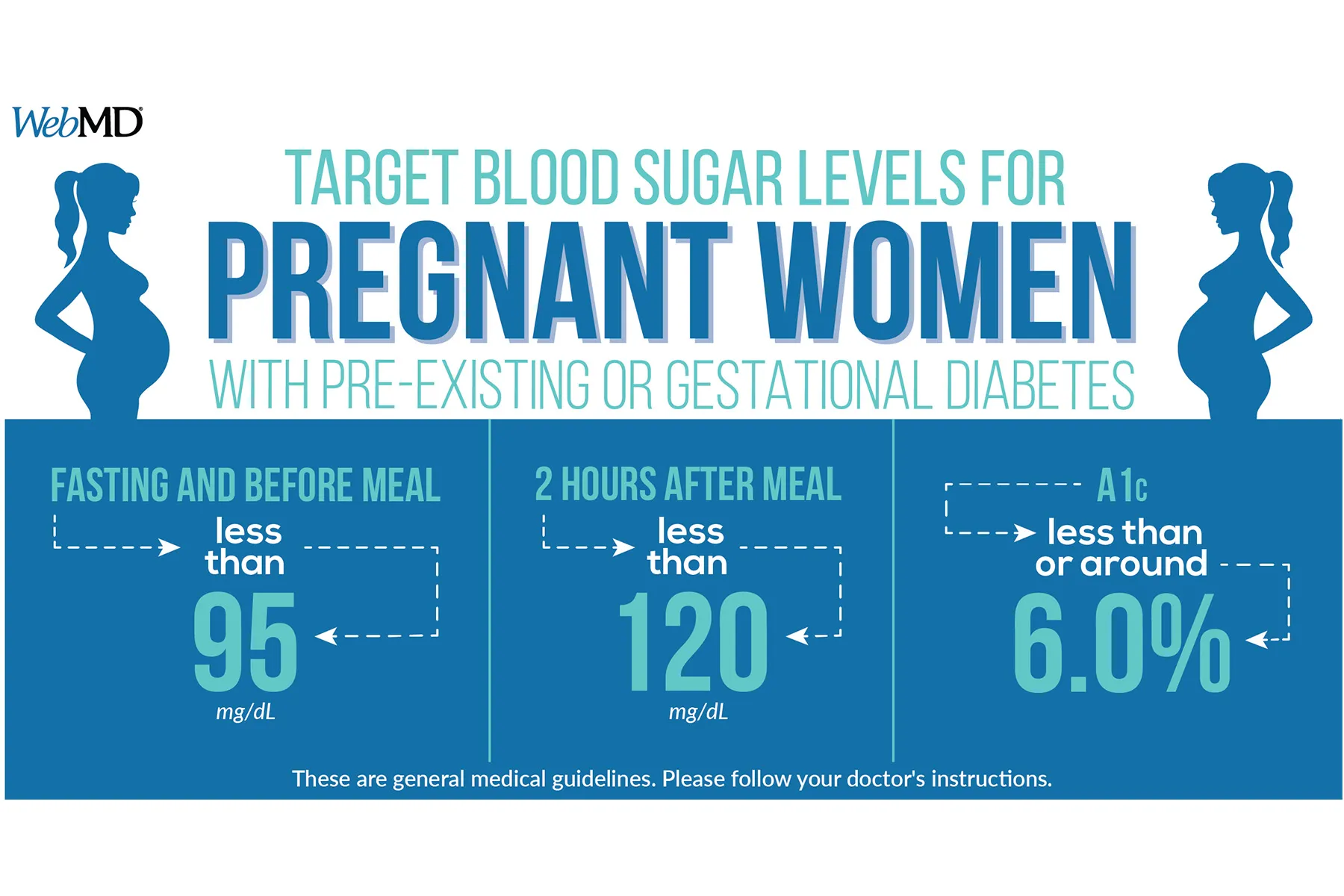
The American Diabetes Association recommends these targets for pregnant women who test their blood sugar:
- Before a meal: 95 milligrams/deciliter (mg/dL) or less
- 1 hour after a meal: 140 mg/dL or less
- 2 hours after a meal: 120 mg/dL or less
Gestational Diabetes Causes
When you eat, your pancreas releases insulin, a hormone that helps move a sugar called glucose from your blood to your cells, which use it for energy.
During pregnancy, your placenta makes hormones that cause glucose to build up in your blood. Usually, your pancreas can send out enough insulin to handle it. But if your body can’t make enough insulin or stops using insulin as it should, your blood sugar levels rise, and you get gestational diabetes.
Gestational Diabetes Risk Factors
You’re more likely to get gestational diabetes if you:
- Were overweight before you got pregnant
- Are Black, Asian, Hispanic or Latinx, Alaska Native, Pacific Islander, or Native American
- Have blood sugar levels that are higher than they should be but not high enough to be diabetes (this is called prediabetes)
- Have a family member with diabetes
- Have had gestational diabetes before
- Have polycystic ovary syndrome (PCOS) or another health condition linked to problems with insulin
- Have high blood pressure, high cholesterol, heart disease, or other medical complications
- Have given birth to a large baby (weighing more than 9 pounds)
- Have had a miscarriage
- Have given birth to a baby who was stillborn or had certain birth defects
- Are older than 25
Gestational Diabetes Diagnosis
Gestational diabetes usually happens in the second half of pregnancy.
When do they test for gestational diabetes?
Your doctor will check for it between weeks 24 and 28, or sooner if you're at high risk.
Gestational diabetes test
Your doctor will give you a glucose tolerance test. For the test, you’ll drink 50 grams of glucose in a sweet drink, which will raise your blood sugar. An hour later, you’ll take a blood glucose test to see how your body handled all that sugar. If the results show that your blood sugar is higher than a certain level, you’ll need a 3-hour oral glucose tolerance test. For this test, you’ll take a blood glucose test after you have fasted for at least 8 hours (your doctor’s office will tell you exactly how long to fast for) and then drink a beverage containing 100 grams of glucose. After that, you’ll take a blood glucose test every hour for the next 3 hours. Your doctor can also test you by having you fast for at least 8 hours, take a blood glucose test, drink a drink containing 75 grams of glucose, and then take a blood glucose test once an hour for the next 2 hours.
Gestational diabetes range
A high blood sugar level is above 130-140 mg/dL (7.2-7.7 mmol/L). If it's higher than 200 mg/dL (11.1 mmol/L), then it's likely that you have gestational diabetes.
If you’re at high risk but your test results are normal, your doctor might test you again later in your pregnancy to make sure you still don’t have it.
Gestational Diabetes Treatment
If you have gestational diabetes, you’ll need treatment as soon as possible to keep yourself and your baby healthy during your pregnancy and delivery. Your doctor will ask you to:
- Check your blood sugar levels four or more times a day
- Check your urine for ketones, chemicals that mean that your diabetes isn’t under control
- Eat healthy foods
- Make exercise a habit
Your doctor will keep track of your weight and your baby’s development. They might give you insulin or another medicine to keep your blood sugar under control.
Gestational Diabetes Complications
If you have gestational diabetes, you have a higher chance of complications. They include:
Needing a C-section. Since your baby might be larger than normal, you may need a C-section, or surgery to deliver your baby through your belly.
Hypoglycemia. Also called low blood sugar, this condition can happen when you take insulin or other medicine to control your diabetes. Both you and your baby can get hypoglycemia.
Preeclampsia. If you have high blood pressure, protein in your pee, and constant swelling in your fingers and toes, it could indicate preeclampsia. It's a serious condition requiring close tracking by a doctor. Preeclampsia can be dangerous for both you and your unborn child. It can lead to your baby being born early and raise your chances of seizures or stroke during labor. If you have diabetes, you're more prone to high blood pressure than those without diabetes.
Gestational Diabetes Diet
Take these simple steps to stay well:
Eat a healthy, low-sugar diet. Talk to your doctor to be sure you’re getting the nutrition you need. Follow a meal plan made for someone with diabetes:
- Trade sugary snacks such as cookies, candy, and ice cream for natural sugars such as fruits, carrots, and raisins. Add vegetables and whole grains, and watch your portion sizes.
- Have three small meals along with two or three snacks at about the same times every day.
- Get 40% of your daily calories from carbs, 20% from protein, and 25%-40% from fats. Most of the carbs should be complex and rich in fiber.
- Aim for 20-35 grams of fiber a day. Foods such as whole-grain breads, cereals, and pasta; brown or wild rice; oatmeal; and vegetables and fruits will help get you there.
- Limit your total fat to less than 40% of your daily calories. Saturated fat should be less than 10% of all the calories you eat.
- Eat a variety of foods to make sure you get enough vitamins and minerals. You may need to take a supplement to cover your bases. Ask your doctor if they think you should take one.
Gestational diabetes breakfast ideas
Here are a few breakfast ideas if you have gestational diabetes:
- A bowl of oatmeal made with water or skim milk
- Two slices of whole-grain toast with unsaturated low-fat spread or cream cheese
- A boiled or poached egg
- Yogurt and nuts
Gestational diabetes snacks
For a snack, you can try:
- Greek yogurt topped with nuts, seeds, or fruit
- Unsalted nuts or seeds
Get the right prenatal care: Your doctor can check to see if you have gestational diabetes and offer advice on food, activity, and weight loss. They can also point you to other health professionals, such as nutritionists, that can help.
If you have morning sickness, eat small snacks. Nibble on crackers, cereal, or pretzels before you get out of bed. As you go through your day, have small meals often and avoid fatty, fried, and greasy foods.
If you take insulin, make sure you've got a plan to deal with low blood sugar. Throwing up can lower your glucose level. Talk to your doctor if you're not sure what to do.
Gestational Diabetes Exercise
Exercise throughout your pregnancy. You can exercise when you have gestational diabetes as long as your doctor says it’s OK. Being active is a good way to help manage your blood sugar. Staying fit during pregnancy is also good for your posture and can curb some common problems, such as backaches and fatigue.
- Get active as soon as possible. Aim for 30 minutes of moderate activity most days of the week. Running, walking, swimming, and biking are good options. If you are not active now, start slowly and build up to 30 minutes a day.
- Was there a workout that you were doing before you found out you were pregnant? Do you have an activity that you love? Check with your doctor to see if you can keep it up, if you should make some changes, or if it's better to try something else.
- Exercise can lower your blood sugar. So, always have a form of quick sugar with you, such as glucose tablets or hard candy, when you work out.
How to Prevent Gestational Diabetes
You can lower your chances before you get pregnant by:
- Eating nutritious foods
- Staying active
- Losing extra weight
Gestational Diabetes Effects on Babies
Your baby will probably be healthy if you and your doctor manage your blood sugar while you have gestational diabetes.
Right after you give birth, doctors will check your newborn's blood sugar level. If it’s low, your baby may need to get glucose through an IV until it gets back to normal.
Gestational diabetes raises the chance that your baby will be larger than normal. It's also linked to jaundice, in which the skin looks yellowish. Jaundice generally fades quickly with treatment.
Although your child will be more likely than other kids to get type 2 diabetes later on, a healthy lifestyle (including a good diet and lots of physical activity) can cut that risk.
Average week of delivery with gestational diabetes
Having gestational diabetes means your doctor may induce labor early, at 37-38 weeks. A full-term pregnancy starts at 39 weeks. An earlier labor lowers the chances of health problems for you and your baby.
Will I Get Type 2 Diabetes?
Because you had gestational diabetes, you have a greater chance of having type 2 diabetes. But it's not certain that it will happen, and you can take action to prevent that.
Your blood sugar levels will likely return to normal about 6 weeks after childbirth. (Your doctor will check on that.) If it does, you should get follow-up tests at least every 3 years; your doctor may recommend yearly testing.
To lower your odds:
- Try to keep your weight in a healthy range. Not sure what that is? Ask your doctor.
- Eat lots of vegetables, whole grains, fruits, and lean protein.
- Make exercise a habit.
If you plan to have another baby, keep in mind that you are more likely to get gestational diabetes again. Ask your doctor if any lifestyle changes would help you avoid that.
Takeaways
Gestational diabetes is a condition where blood sugar levels rise during pregnancy. It affects up to 10% of pregnancies in the U.S. It typically appears in the second half of pregnancy and often goes unnoticed, with symptoms such as more thirst, hunger, and peeing. You have a higher chance of getting it if you're overweight before pregnancy, have a family history of diabetes, and belong to certain ethnic backgrounds. Treatment focuses on tracking your blood sugar levels, adopting a healthy diet, and staying active. Although gestational diabetes usually goes away after childbirth, it can impact your baby's health and raise your chances of having type 2 diabetes later in life.