Testing Blood Sugar
Most people with diabetes should test their blood sugar (aka blood glucose) levels regularly. Knowing the results lets you adjust your strategy for keeping the disease in check.
Regular testing can also help you avoid getting long-term health problems that can stem from the condition, like:
- Heart disease
- Stroke
- High blood pressure
- High cholesterol
- Blindness
- Kidney disease
- Skin problems
Research shows that in people with either type 1 or type 2 diabetes, sticking to your target blood sugar and HbA1c levels makes complications less likely.
There are several ways to test your blood sugar:
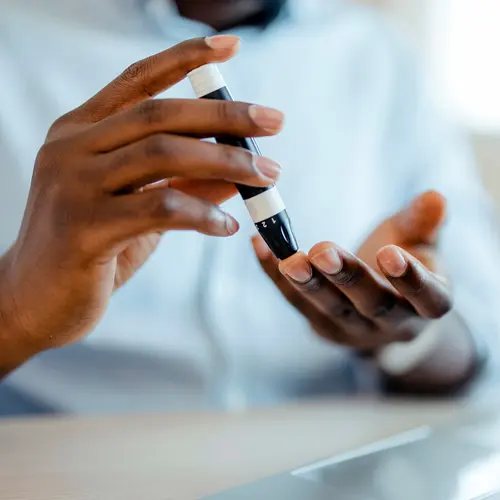
From your fingertip: You prick your finger with a small, sharp needle (called a lancet) and put a drop of blood on a test strip. Then you put the test strip into a meter that shows your blood sugar level. You get results in less than 15 seconds and can store this information for
future use. Some meters can tell you your average blood sugar level over a period of time and show you charts and graphs of your past test results. You can get blood sugar meters and strips at your local pharmacy.
Meters that test other sites: Newer meters let you test sites other than your fingertip, such as your upper arm, forearm, base of the thumb, and thigh. You may get different results than from your fingertip. Blood sugar levels in the fingertips show changes more quickly than those in other testing sites. This is especially true when your blood sugar is rapidly changing, like after a meal or after exercise. If you are checking your sugar when you have symptoms of hypoglycemia, you should use your fingertip if possible, because these readings will be more accurate.
Continuous glucose monitoring system: These devices, also called interstitial glucose measuring devices, are combined with insulin pumps. They are similar to finger-stick glucose results and can show patterns and trends in your results over time.
When to Test Blood Sugar
You may need to check your blood sugar several times a day, such as before meals or exercise, at bedtime, before driving, and when you think your blood sugar levels are low.
Everyone is different, so ask your doctor when and how often you should check your blood sugar. If you're sick, you'll probably need to test your blood sugar more often.
What Affects Your Results
If you have certain conditions, like anemia or gout, or if it's hot or humid or you're at a high altitude, that can affect your blood sugar levels.
If you keep seeing unusual results, recalibrate your meter and check the test strips.
The chart below gives you an idea of where your blood sugar level should be throughout the day. Your ideal blood sugar range may be different from another person's and will change throughout the day.
| Time of Test | Ideal for Adults With Diabetes |
| Before meals | 70-130 mg/dL |
| After meals | Less than 180 mg/dL |
Home Blood Glucose Monitoring and HbA1c
Monitoring your HbA1c level is also important for diabetes control. Many home glucose monitors can display an average blood glucose reading, which correlates with the HbA1c.
Average Blood Glucose Level (mg/dL) | HbA1c (%) |
126 | 6 |
154 | 7 |
183 | 8 |
212 | 9 |
240 | 10 |
269 | 11 |
298 | 12 |
When Should I Call My Doctor About My Blood Sugar?
Ask your doctor about your target blood sugar range, and make a plan for how to handle blood sugar readings that are either too high or too low and when to call your doctor. Learn about the symptoms of high or low blood sugar, and know what you can do if you begin to have symptoms.
How Do I Record My Blood Sugar Test Results?
Keep good records of any blood, urine, or ketone tests you do. Most glucose monitors also have a memory. Your records can alert you to any problems or trends. These test records help your doctor make any needed changes in your meal plan, medicine, or exercise program. Bring these records with you every time you see your doctor.